CFO Insights Newsletter June 2026
As businesses move through the midpoint of the year, many owners and leadership teams find themselves in one of two positions:
Either the year has moved faster than expected and they have not stopped to evaluate progress…
Or they know things are off track but have not taken the time to determine exactly why.
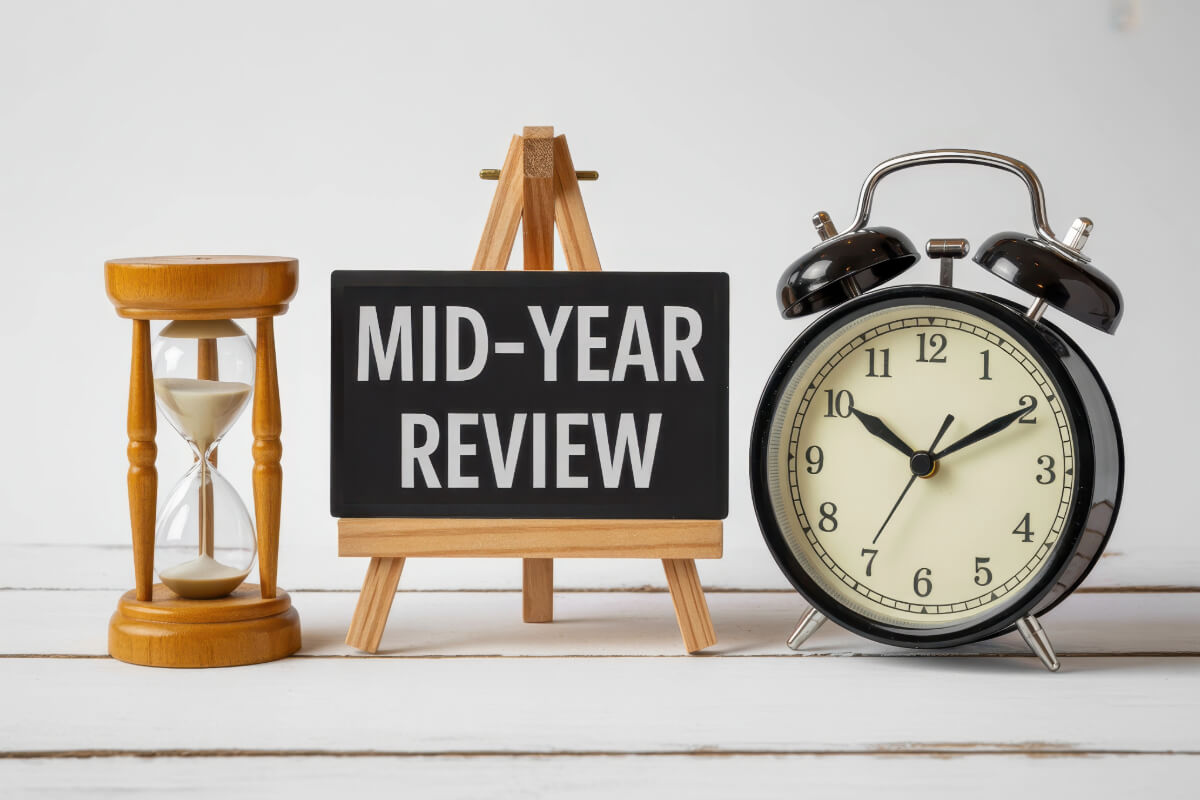
The middle of the year is not simply a calendar milestone. It is one of the most important strategic checkpoints a business can utilize to protect profitability, strengthen cash flow, and improve operational alignment before year-end pressure begins to build.
Strong businesses do not wait until Q4 to discover problems. They use mid-year reviews to identify trends early, adjust strategy intentionally, and ensure their financial decisions still support the goals they established at the beginning of the year.
A true mid-year momentum check-in is not just reviewing revenue numbers.
It is evaluating whether the business is still financially aligned with its priorities, whether the team is operating with clarity, and whether year-to-date performance trends require strategic adjustments.
This is where financial leadership becomes critical.
Mid-Year Reviews Are About Direction, Not Just Performance
Many businesses approach goal reviews emotionally.
If revenue is up, they assume things are going well.
If revenue is down, they assume they are behind.
But experienced CFOs understand that revenue alone rarely tells the full story.
A business can experience:
- Increased revenue with declining cash flow
- Strong sales growth with shrinking margins
- Higher production with lower operational efficiency
- Team expansion without improved profitability
- Revenue growth that actually creates operational strain
This is why mid-year financial reviews must go deeper than surface-level metrics.
The real purpose of a mid-year review is to determine:
- Is the business still aligned with its financial goals?
- Are operational decisions supporting profitability?
- Is the current pace sustainable?
- Are margins healthy enough to support growth?
- Is cash flow keeping up with operational demands?
- Is the team aligned around priorities and accountability?
- What trends are developing that could create pressure later?
The businesses that finish the year strong are usually the businesses willing to adjust early.
The Danger of Continuing Without Reassessment
One of the most common financial mistakes businesses make is continuing to operate under assumptions that are no longer accurate.
The budget created in January may not reflect:
- Market changes
- Labor cost increases
- Shifts in customer behavior
- Changes in project timelines
- Delayed receivables
- Supply chain cost increases
- Unexpected operational inefficiencies
- New growth opportunities
Without regular reassessment, businesses often continue making decisions based on outdated expectations.
This creates misalignment between:
- Operations and profitability
- Staffing and production needs
- Revenue growth and cash flow capacity
- Strategic goals and actual performance
Over time, this disconnect compounds.
What begins as a small variance in Q1 can become a major financial issue by Q4 if leadership does not stop to recalibrate.
Mid-year financial alignment reviews create the opportunity to:
- Correct inefficiencies early
- Protect margins before erosion becomes severe
- Improve forecasting accuracy
- Reset realistic goals
- Strengthen accountability
- Reallocate resources strategically
- Refocus teams around the most important priorities
Start With the Critical 4
At McCoy Accounting Advisors, we believe the most effective financial reviews begin with evaluating the Critical 4:
- Revenue
- Gross Profit
- Net Profit
- Cash
These four metrics provide the clearest picture of whether growth is actually healthy.
Revenue: Is Growth Intentional or Reactive?
Revenue should always be analyzed beyond the top-line number.
Questions leadership should ask:
- Which revenue streams are growing?
- Which services or products are most profitable?
- Are lower-margin jobs increasing volume without improving profits?
- Are pricing structures still supporting margins?
- Is revenue growth sustainable operationally?
- Are sales projections still realistic?
Many businesses unintentionally create growth that strains operations because they focus only on increasing sales instead of improving quality of revenue.
Mid-year reviews are an opportunity to evaluate whether revenue growth aligns with profitability goals.
Gross Profit: Are Margins Holding?
Gross profit often reveals operational issues before they appear elsewhere.
This is especially important for:
- Construction companies
- Trades businesses
- Service-based businesses
- Labor-intensive operations
Areas to evaluate include:
- Labor efficiency
- Material cost increases
- Job costing accuracy
- Pricing strategy
- Scope creep
- Vendor pricing changes
- Production inefficiencies
If revenue has increased but gross profit percentages have declined, leadership must determine why immediately.
A business cannot scale effectively if margin erosion is happening underneath the surface.
Net Profit: Is the Business Actually Becoming More Profitable?
Mid-year reviews should determine whether operational growth is translating into actual financial improvement.
Common issues include:
- Expense creep
- Increased overhead without productivity gains
- Excessive software or subscription costs
- Staffing growth without accountability metrics
- Operational duplication
- Lack of purchasing controls
Net profit reviews help leadership identify where spending has slowly expanded without intentional review.
Many businesses lose profitability gradually rather than suddenly.
Mid-year financial alignment creates the opportunity to stop that trend before it accelerates.
Cash: Is Liquidity Supporting the Business Properly?
Cash flow remains one of the most important indicators of financial health.
Even profitable businesses can experience operational stress if cash flow timing is weak.
Leadership should review:
- Accounts receivable aging
- Billing delays
- Collection timelines
- Vendor payment cycles
- Payroll timing
- Debt obligations
- Operating reserve levels
- Upcoming large expenses
- Seasonality trends
Cash flow issues are often timing issues before they become profitability issues.
The earlier those timing gaps are identified, the easier they are to correct.
Progress Tracking Must Be Measurable
One of the biggest reasons businesses fail to achieve annual goals is because progress is not consistently measured.
Goals without measurable tracking become ideas instead of operational priorities.
A mid-year momentum review should include:
- KPI evaluation
- Budget-to-actual comparisons
- Forecast adjustments
- Operational trend analysis
- Accountability reviews
- Department performance evaluations
Leadership teams should evaluate:
- What goals are ahead of schedule?
- What goals are behind?
- Which initiatives are producing measurable results?
- Which initiatives are consuming resources without return?
- What operational bottlenecks are slowing progress?
- Where is accountability lacking?
The goal is not perfection.
The goal is visibility.
Visibility creates the ability to make informed decisions before problems compound.
Financial Alignment Requires Team Alignment
One of the most overlooked aspects of financial performance is organizational alignment.
Financial goals cannot be achieved if departments are operating independently without shared priorities.
This often appears as:
- Sales teams focused only on volume
- Operations teams overwhelmed by inefficient growth
- Accounting teams lacking timely information
- Leadership teams making disconnected decisions
- Employees unclear about company priorities
Strong financial performance requires operational clarity across the organization.
Every department impacts:
- Revenue
- Margins
- Productivity
- Cash flow
- Client experience
- Operational efficiency
Mid-year reviews are an ideal time to reconnect the team around:
- Financial priorities
- Operational goals
- Accountability metrics
- Communication expectations
- Process improvements
- Efficiency opportunities
When teams understand how their responsibilities impact profitability and cash flow, decision-making improves significantly.
Reevaluate Forecasts Based on Actual Trends
Forecasting should never remain static throughout the year.
The strongest financial leaders continuously update projections based on actual performance trends.
A mid-year review should include:
- Revised revenue forecasts
- Updated labor projections
- Gross profit trend analysis
- Cash flow forecasting adjustments
- Revised operational expenses
- Capital expenditure planning
- Hiring reassessment
- Updated profitability expectations
This process allows leadership to make proactive decisions rather than reactive ones.
For example:
- If labor costs are trending higher than projected, pricing may need adjustment.
- If receivables are slowing, collection strategies may need improvement.
- If growth is accelerating faster than expected, systems may need strengthening before hiring additional staff.
- If profitability is below target, expense controls may need tightening immediately.
Businesses that continuously forecast maintain significantly greater financial control than businesses that only review financials historically.
Mid-Year Is the Time to Evaluate Operational Efficiency
Growth can expose weaknesses in systems quickly.
What worked at the beginning of the year may no longer support current operational demands.
Mid-year operational evaluations should assess:
- Workflow bottlenecks
- Communication gaps
- Reporting inefficiencies
- Technology limitations
- Manual processes consuming excessive time
- Staffing utilization
- Leadership capacity
- Process consistency
Many businesses initially assume adding more staff is the answer.
However, operational inefficiencies often create the appearance of capacity problems.
Before increasing labor costs, leadership should evaluate:
- Can systems improve efficiency?
- Can automation reduce manual work?
- Are processes standardized?
- Are responsibilities clearly defined?
- Is accountability consistent?
- Are teams utilizing technology effectively?
Improving systems frequently produces stronger profitability than simply increasing headcount.
Accountability Is What Creates Momentum
Momentum does not happen automatically.
Businesses maintain momentum when leadership consistently:
- Reviews progress
- Communicates priorities
- Measures performance
- Addresses issues quickly
- Adjusts strategy intentionally
- Reinforces accountability
Without accountability, businesses drift.
Operational drift often appears gradually:
- Delayed reporting
- Inconsistent collections
- Margin compression
- Uncontrolled spending
- Team confusion
- Reduced urgency
- Goal abandonment
Mid-year reviews help reset expectations and re-establish leadership focus.
The purpose is not to criticize teams.
The purpose is to create clarity.
Clarity improves execution.
Execution improves results.
Financial Realignment Creates Stronger Year-End Results
The second half of the year often determines overall annual success.
Businesses that use mid-year reviews strategically gain a significant advantage because they:
- Identify issues earlier
- Improve forecasting accuracy
- Protect margins proactively
- Preserve cash flow stability
- Align teams operationally
- Reallocate resources effectively
- Focus on the highest-impact priorities
Financial realignment does not mean abandoning goals.
It means ensuring goals still align with operational reality and current business conditions.
Sometimes that means accelerating investments.
Sometimes it means tightening operational discipline.
Sometimes it means slowing down growth temporarily to strengthen systems.
Strong financial leadership requires the willingness to evaluate reality honestly and make adjustments intentionally.
Final Thoughts From the CFO Chair
Mid-year is not simply a checkpoint.
It is a strategic opportunity.
The businesses that finish the year strongest are rarely the businesses that never faced challenges. They are the businesses that identified issues early, adapted intentionally, and stayed aligned financially and operationally throughout the year.
Growth without alignment creates stress.
Growth with alignment creates sustainability.
As you move into the second half of the year, now is the time to evaluate:
- Are your financials aligned with your goals?
- Are your systems supporting growth?
- Is your team operating with clarity?
- Are your forecasts realistic?
- Are you protecting profitability and cash flow intentionally?
Because momentum is not built by hoping the second half of the year improves on its own.
Momentum is built through visibility, accountability, strategic alignment, and disciplined financial leadership.
At McCoy Accounting Advisors, we help business owners move beyond simply reviewing numbers and instead use financial insight strategically to improve profitability, strengthen cash flow, and support sustainable growth through the Critical 4: Revenue, Gross Profit, Net Profit, and Cash.