When we ask contractors how their business is performing, I often hear, “We’re busy.”
Busy sounds good — but as every CFO knows, busy doesn’t always mean profitable.
In construction, trades, and service industries, being busy is only half the story. The companies that truly succeed are the ones that can connect their activity to profitability — those that don’t just work harder, but lead smarter.
And the key to leading smarter lies in understanding your numbers. That’s where KPI dashboards (Key Performance Indicator dashboards) come in.
From a Fractional CFO perspective, we work with contractors, trades and service businesses that want to run their operations with intention and clarity. A KPI dashboard is one of the most powerful leadership tools they can use. It transforms overwhelming financial data into clear, actionable insights — helping business owners make better, faster, and more confident decisions.
What Is a KPI Dashboard?
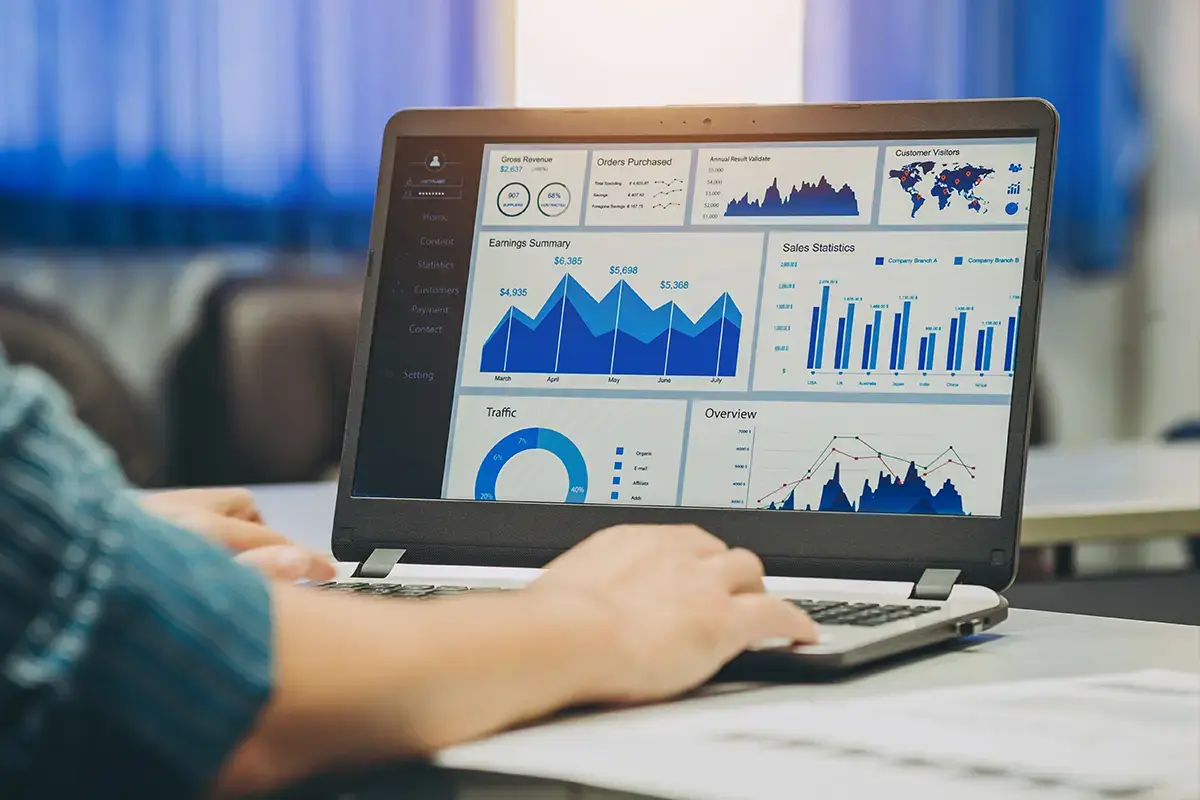
A KPI dashboard is a visual reporting tool that consolidates your company’s key metrics into one clear, accessible view.
Instead of chasing data across spreadsheets, reports, and software systems, your dashboard becomes your single source of truth.
In construction and trades businesses, KPI dashboards typically track metrics like:
- Revenue by project or service line
- Gross profit margin per job or crew
- Net profit margin after overhead
- Accounts receivable (AR) days and cash on hand
- Job cost variance (budgeted vs. actual costs)
- Labor utilization and overhead ratio
These aren’t just numbers — they’re signals. Each KPI reflects how effectively your business is performing in real time.
When you can see these numbers together, you stop managing based on instinct and start managing based on insight.
Why KPI Dashboards Matter
The construction and trades industries operate in constant motion. Materials prices fluctuate. Job timelines shift. Weather delays happen. And clients don’t always pay on schedule.
Amid that chaos, it’s easy to lose sight of the financial story your business is telling.
KPI dashboards cut through the noise.
They give owners, CFOs, and project managers the visibility they need to make decisions grounded in data, not emotion.
Here’s why they matter:
Real-Time Clarity
In a fast-moving business, outdated reports can be dangerous. By the time you review a static P&L, the issues that caused it may already have worsened.
KPI dashboards pull in real-time or near-real-time data so you can see what’s happening today — not last quarter.
That clarity allows you to address small issues before they grow into major financial setbacks.
Accountability Across the Team
When your entire leadership team — from accounting to operations to project management — can see the same numbers, alignment follows.
A well-built KPI dashboard creates transparency. Project managers can see job costs in real time. Operations teams can monitor labor efficiency. Accounting can track receivables and cash flow.
When everyone knows what matters most and how their performance impacts it, accountability becomes part of your culture.
Faster, Smarter Decision-Making
Dashboards let you identify trends and make timely adjustments.
If gross profit margins start to dip, you can investigate whether labor hours or materials are running high.
If AR Days increase, you can tighten collection processes before cash flow becomes strained.
If cash reserves drop, you can plan ahead for upcoming expenses or adjust project pacing.
The ability to pivot quickly keeps your business agile — and your profitability intact.
Leadership Confidence
As a CFO, I know that leadership confidence comes from clarity. The better you understand your numbers, the more decisively you can lead your business.
KPI dashboards give you that confidence. They turn uncertainty into awareness and financial stress into strategic action.
When you know exactly where your business stands — by the numbers — you’re free to lead instead of react.
The CFO Perspective: How KPI Dashboards Transform Leadership
As a CFO, I view KPI dashboards as more than financial tools. They are leadership instruments.
They bridge the gap between field operations and financial strategy, ensuring that every decision — from staffing to bidding to investment — is informed by data, not guesswork.
Here’s how great leaders use dashboards to manage smarter:
1. Align KPIs with Strategy
Your dashboard should reflect your business goals — not generic metrics.
If your focus is growth, track backlog, revenue trends, and project pipeline.
If your goal is profitability, emphasize job costing, gross profit %, and net profit %.
If your focus is stability, watch AR Days, cash reserves, and overhead ratios.
When KPIs connect directly to strategic objectives, your dashboard becomes a roadmap, not just a report.
2. Focus on Leading Indicators
Many business owners focus on lagging indicators — revenue, profit, or cash flow. Those numbers are important, but they tell you what already happened.
Leading indicators, however, tell you what’s likely to happen next.
For contractors, leading indicators include:
- Bid-to-win ratio: Are your pricing and proposals competitive?
- Labor utilization: Are crews scheduled efficiently?
- AR Days trend: Is cash flow tightening before you feel it?
- Gross profit per job: Are projects being managed profitably?
By tracking these early signals, you can anticipate challenges and take action before they hit your bottom line.
3. Keep It Simple — Clarity Over Complexity
One of the most common mistakes I see is dashboard overload — too many metrics, not enough meaning.
A good CFO knows that clarity beats complexity every time. Focus on the six to eight KPIs that tell your business’s story best.
When data is simple, it’s usable.
When it’s usable, it becomes powerful.
4. Connect KPIs to Accountability
Numbers only matter if they drive behavior.
Set clear accountability for each KPI.
- Who is responsible for monitoring AR Days?
- Who owns gross profit margin targets?
- Who ensures job cost reports are accurate?
When everyone knows which numbers they influence — and how success is measured — performance improves naturally.
This approach turns your KPI dashboard into a leadership tool that encourages ownership across the organization.
5. Review and Reforecast Regularly
A dashboard’s real power comes from consistency.
Review it weekly or monthly. Discuss it as a leadership team. Ask questions:
- What’s trending well?
- What needs adjustment?
- Are we still aligned with our goals?
Pair those insights with your budget and forecasts. When your KPI trends inform your next financial decisions, your business stays proactive, not reactive.
That’s the difference between managing numbers and leading through them.
How KPI Dashboards Tie to Budgeting and Profitability
Budgets and dashboards are two sides of the same coin.
Your budget sets the plan; your dashboard tells you how well you’re following it. Together, they create a continuous improvement loop:
Budget for your goals. Set revenue targets, gross profit margins, and cash flow goals.
Track performance through your dashboard. Monitor the Critical 4: Revenue, Gross Profit, Net Profit, and Cash.
Adjust based on data. When actuals deviate from plan, use insights to course correct immediately.
This process transforms budgeting from a once-a-year exercise into an ongoing leadership practice — one rooted in awareness and adaptability.
At McCoy Accounting Advisors, we help clients connect their budgeting for construction companies directly to KPI dashboards for trades businesses, ensuring every dollar and decision aligns with their strategic goals.
The Leadership Advantage
Dashboards do more than provide data — they shape behavior, strengthen communication, and elevate leadership across the organization.
When a contractor has clear visibility into operations and finances, decisions become intentional. Meetings become productive. Accountability becomes culture.
Dashboards encourage leaders to ask better questions:
- “What story are our numbers telling this month?”
- “Are we using resources efficiently?”
- “How can we improve margins before year-end?”
These questions drive better decisions, and better decisions drive sustainable profitability.
Final Thoughts from the CFO Chair
Leading smarter isn’t about doing more. It’s about seeing more — and acting on what you see.
KPI dashboards give contractors, trades, and service businesses the clarity they need to lead with purpose. They turn your numbers into strategy, your data into direction, and your leadership into measurable results.
At McCoy Accounting Advisors, we help business owners move beyond reports and spreadsheets to build systems that empower their leadership. Through Fractional CFO services in Kansas City, KPI dashboards for trades businesses, budgeting for construction companies, and profitability strategies for contractors, we help clients focus on the metrics that matter most.
Lead smarter, not harder. Build a KPI dashboard that helps you measure what matters and manage with confidence.